
30 August 2025 | LarissaNet
Interview by Giannis Andreadakis
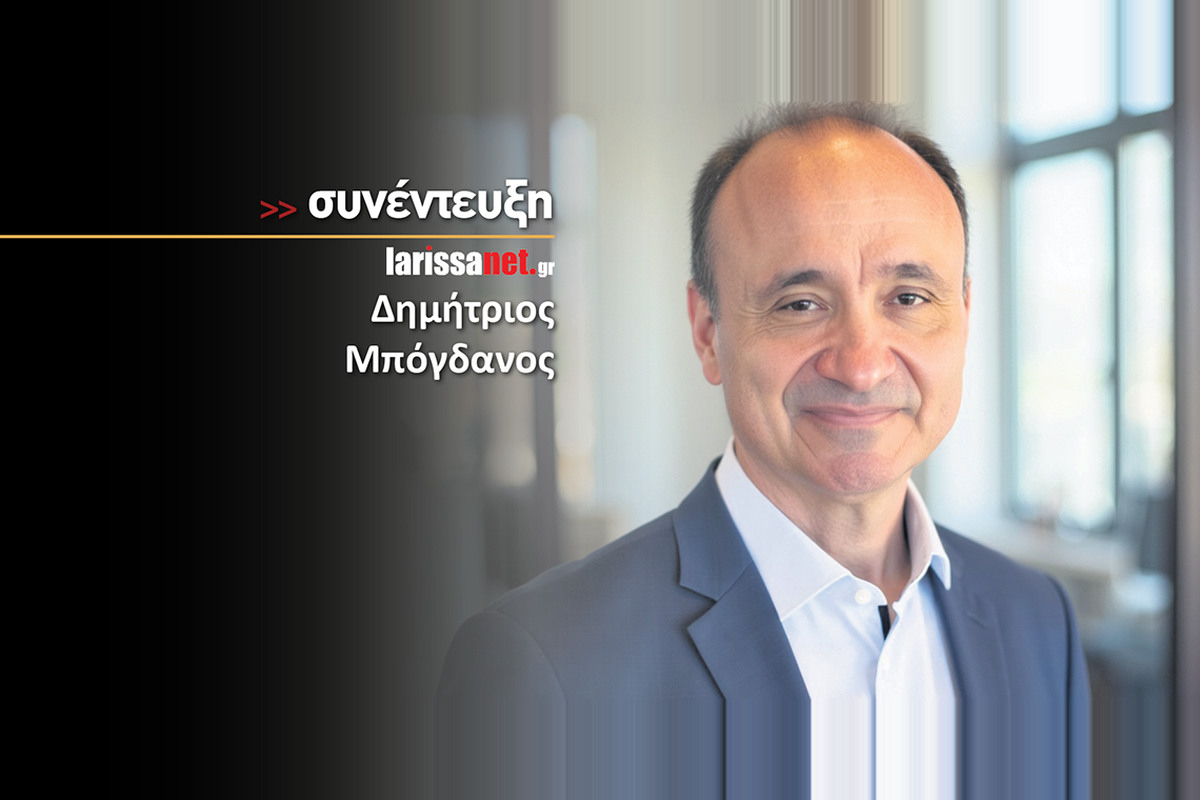
Professor Dimitrios Bogdanos, Professor of Medicine at the University of Thessaly, Director of the Medical Degree English Program and Chair of its Steering Committee, reflects on the Program’s first year. He highlights its achievements, challenges and future ambitions. He also discusses the advantages of Larissa, a modern university city welcoming aspiring doctors from around the world.
A Successful First Year for the Medical Degree English Program
Professor, the Medical Degree English Program at the University of Thessaly has just completed its first year. New students will arrive next month. How do you assess this initial phase?
I must admit that we are extremely satisfied. The first year was full of vision and enthusiasm, but it also presented challenges requiring immediate solutions. The Program received its official authorization in May 2024 and launched in September of the same year. This left us only a few months to prepare. Our students needed to begin attending lectures and laboratories without delay, and we achieved that goal. Credit goes to all professors, instructors and laboratory teams. They worked hard to ensure that both the Greek-taught and English-taught programs could operate smoothly without disrupting the Faculty’s activities. I would also like to thank our first-year students, who genuinely supported this ambitious initiative. Once we overcame the initial challenges, we were able to adapt to the Program’s growing demands. Our figures indicate exceptionally high student satisfaction, making the Program one of the most successful initiatives of its kind. Preparatory work had begun two years earlier, so we were well positioned when authorization was granted. Nevertheless, we are not resting on our achievements. We are setting even higher goals and working harder to reach them.
International Student Enrollment and Global Interest
How many students are enrolled, and where do they come from?
We have already welcomed 96 students: 46 from the previous academic year and 50 new students for 2025–2026. As with Greece’s other three English-taught medical programs, most students come from Cyprus. However, the proportion of students from other countries is gradually increasing. This year, 20% of our students come from nine countries, compared with 10% last year. We hope that by 2027, students from countries other than Cyprus will account for more than 35%. I would also like to reassure Cypriot parents that we welcome their children with a strong sense of responsibility. Our aim is to help them study and excel in Larissa, a city that is particularly welcoming to students from Cyprus.
What level of interest have you seen from other countries? What impressions has Larissa made on students?
The figures speak for themselves. Last year, we received more than 300 expressions of interest from 31 countries. Applications came from places as diverse as the United States, Australia, Zambia and Indonesia. More than 85% of these prospective students had graduated with excellent academic results in their home countries. Yet they chose to pursue medical studies in Greece. Larissa appeals to students because it is a modern university city. It is more affordable, compact and safe, without some of the disadvantages associated with Athens and Thessaloniki. The Faculty of Medicine is also among the fastest-rising medical schools in Greece, showing continuous improvement in academic rankings. It offers a strong curriculum in both basic and clinical sciences. Two additional advantages stand out. The Faculty of Medicine and the University Hospital are located on the same campus, making access particularly convenient. The facilities are also modern and recently developed.
Finally, some students are especially attracted by the opportunity to study in the city where Hippocrates practised medicine.
Internationalization and Academic Development
What does establishing an English-taught medical program mean for the University of Thessaly?
It represents a visionary step towards greater international engagement for both the University and the local community. At full capacity, the Program will welcome 300 international students. These young people will bring ambition, talent and aspirations to Larissa. This development is significant for the Faculty of Medicine, the University of Thessaly and the wider region. The Program opens doors to students worldwide while strengthening the University’s reputation and international reach. However, this initiative is not simply about revenue or visibility. It is about educational quality, international experience and developing future doctors with a global perspective and a strong sense of social responsibility.
How were the first students selected, and where did they come from?
The selection process was demanding and helped establish the Program’s strong academic character. We assessed English-language proficiency and academic qualifications. Equally important were applicants’ motivation and their commitment to pursuing medical education with an international outlook.
What are the main differences between the English-taught and Greek-taught programs?
In terms of academic content, the two programs are equivalent. The English-taught Program mirrors the Greek-taught curriculum, with the same courses and teaching hours. The main differences concern the language of instruction and the emphasis on global health, intercultural communication and comparative medicine.
In the near future, we also aim to further integrate modern teaching methods, including problem-based learning and simulation laboratories. Our focus remains excellence in contemporary medical education.
Student Life and the Advantages of Larissa
How have the city and international students responded to Larissa as a study destination?
Local authorities welcomed the Program enthusiastically, and I believe the wider community has responded just as positively. Initially, there were concerns about accommodation and the overall living environment. However, Larissa has demonstrated its warmth and welcoming character. We must acknowledge that the lack of student residences remains a challenge. International students often expect university accommodation to be available as an option.
According to student feedback, the private rental market also offers fewer satisfactory choices than we would like. Nevertheless, students appreciate the quality of life and reasonable living costs. They would welcome better public transport connections and more cycling infrastructure between the city and the Faculty of Medicine. At the same time, they value Larissa’s convenient location and relatively easy access to other cities and natural destinations. I believe the local community has embraced the Program. Cooperation between the Faculty, University administration and wider society has created a supportive environment that students can genuinely experience.
Challenges, Sustainability and Local Economic Impact
What have been the greatest challenges?
We have faced three main challenges. First, organizing administrative and academic support in two languages. Second, helping students adapt quickly to a demanding university environment. Third, ensuring the Program’s financial sustainability. With careful planning and strong cooperation across the Faculty, we can overcome these challenges while maintaining high standards. Through responsible financial management and the support of the University of Thessaly and its Rectorate, we are pursuing ambitious development goals.
How does the Program contribute to the local community and economy?
International students pay annual tuition fees of €12,000. They also live in Larissa, use local services and participate in community activities. This generates economic activity and strengthens the city’s international profile. At the same time, partnerships with foreign universities create opportunities for research, student exchanges and broader educational cooperation. Students expect to live in a modern university city that offers the amenities of a European academic environment. This includes quality housing, reliable urban infrastructure, safety, cultural activities and access to modern technology. Larissa must provide an environment that supports both academic learning and personal development. The Program’s success depends not only on high-quality teaching but also on cooperation between the University and the city.
When local institutions and residents embrace this initiative, students benefit from a safe, open and dynamic environment comparable to that of a modern European university city.
Academic Standards and the Vision for the Future
How do you assess the academic level of the first students?
The overall standard is satisfactory. However, our ambition is to educate excellent doctors. For this reason, our admission criteria and examinations will remain highly demanding. Our students come from families that have made significant investments in their education. Their commitment and ambition motivate us to maintain high standards. We aim to provide reliable, internationally oriented medical education that prepares them for their future careers.
What is your vision for the Program’s future?
The vision of the University administration, which I fully share, is to establish the Medical Degree English Program in Larissa as a reference point for medical education in Southeastern Europe. We want to deliver high-quality education with international impact. We also aim to educate doctors who combine professional excellence, social awareness and a global perspective. Our graduates will pursue careers worldwide and become ambassadors of the University of Thessaly.
A Message to Future Medical Students
What message would you send to prospective students considering Larissa?
Here, you will find an academic family that supports you at every step. Medicine is a demanding but fascinating journey. In Larissa, you will experience it through high-quality teaching, international opportunities and genuine human warmth. We look forward to welcoming you as part of this exciting new chapter. Concluding the interview, Professor Bogdanos emphasized: “The first year demonstrated that the success of an English-taught Medical Program depends on a clear vision and a forward-looking strategy. From the University administration to our instructors and Faculty members, we have built a strong team. Everyone works tirelessly and selflessly towards a common goal: offering a Program that attracts students, achieves international recognition and remains sustainable within the local community. The journey has only just begun, and we continue with determination and dedication,” Professor Dimitrios Bogdanos concluded.
 Greek
 English